


Grow Tomatoes with Terreplenish® Soil Amendment: A Soil-First Guide for Flavor, Vigor, and Fewer Headaches
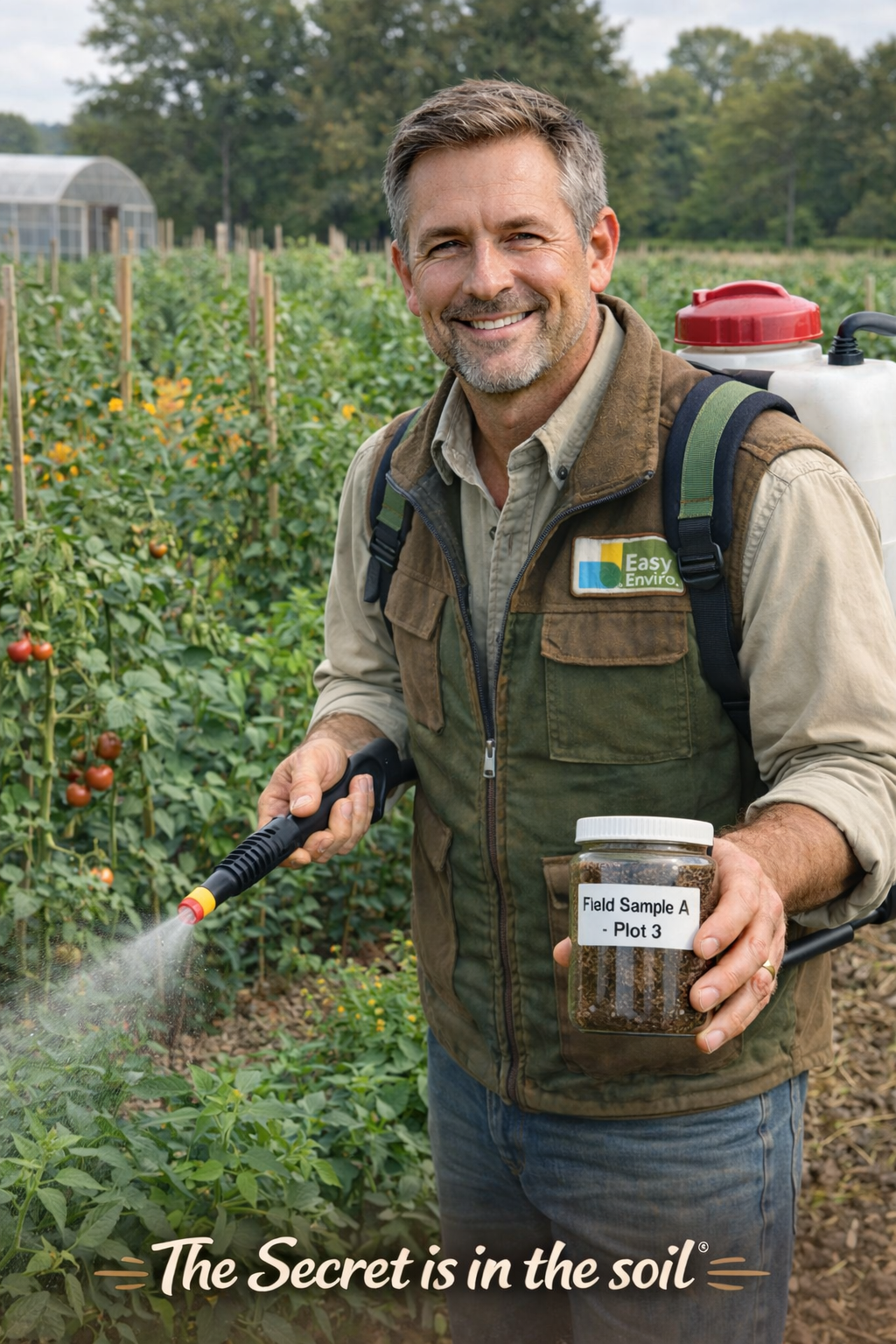
Solanum lycopersicum (tomato) is the warm-season classic that rewards good soil biology. Here’s how to set up your bed (or acres), time planting by region, and apply Terreplenish® correctly, plus a fun varieties fact that will make seed catalogs feel even more dangerous.

This is Bigger than real life
The tomato’s real name, quick origin story, and a fun varieties fact
The cultivated tomato is Solanum lycopersicum, a domesticated nightshade that traveled a long way to become America’s favorite “garden brag.” Research on tomato history points to a journey involving wild relatives and movement between regions in the Americas before tomatoes spread globally after European contact.
Fun fact: depending on how you count (named cultivars, landraces, heirlooms, modern hybrids), there are 10,000+ tomato varieties floating around the world, one reason “just pick a tomato” is never just that.
Why tomatoes are a “soil biology” crop (even in raised beds)
Tomatoes don’t just want “fertility.” They want a functioning root zone: stable moisture, oxygen, and a living microbial community that cycles nutrients steadily rather than in spikes.
That’s where you see the difference between:
Fast green growth (often too much N early) vs.
Balanced growth (strong roots, steady flowering, consistent fruit fill)
In practical terms, soil biology helps tomatoes by:
supporting nutrient availability in the rhizosphere (root zone),
improving soil structure so roots can explore,
buffering stress when weather goes sideways (hot, dry, humid, or erratic).
Tomato regions and seasonality in the U.S.
Tomatoes are grown nationwide, but seasonality shifts dramatically by region and production system.
Field production and market windows
In U.S. commercial fresh production, California and Florida are leading producers, with Florida’s fresh season running roughly October to June (peaks vary) and other states filling in summer windows. Greenhouse/protected culture extends availability beyond traditional outdoor windows.
Home garden timing (the simple rule that prevents heartbreak)
Tomatoes are warm-season plants. A reliable, extension-backed rule of thumb is to plant when soil temperatures are ~60°F or warmer (ideally a bit higher for strong starts).
Most common garden windows (typical):
Deep South / Gulf Coast: late winter–spring transplants; fall tomatoes can be possible in some areas.
Mid-South / lower Midwest: mid-late spring after soils warm.
Upper Midwest / Northeast: late spring to early summer planting; harvest peaks mid-summer through early fall.
High elevation / short-season: choose early varieties and use season extension (mulch, tunnels, wind protection).
Best soil setup for tomatoes (raised bed, garden, or field)
If you only do three things, do these:
Start with structure
Aim for a crumbly, well-drained texture.
Avoid “muck” and avoid “dust.” Both limit roots.
Build organic matter the boring way (it works)
Compost + mulch are the dependable duo.
Mulch stabilizes moisture and reduces soil splash (a disease helper).
Water for consistency
Tomatoes hate “drought → flood → drought.”
Drip irrigation is ideal because it keeps foliage drier and delivers moisture where roots live.

Customer picture of a Tomato grown with Terreplenish
Terreplenish soil amendment: how to apply it correctly on tomatoes
This is the part most folks skip and it’s where results usually live: correct dilution, timing, and compatibility.
What Terreplenish is (in plain terms)
Terreplenish® is a living biological product containing beneficial microbes (including nitrogen-fixers and phosphate-solubilizers), with specific listed organisms like Azotobacter vinelandii and Bacillus subtilis.
It’s also an OMRI Listed, USDA Certified Biobased, and registered and approved in CDFA’s Organic Input Material program.
Application basics (the non-negotiables)
Dilution
Minimum dilution is 1:25 (Terreplenish:water) per the application guidance.
Avoid overly concentrated applications on living foliage; concentrated mixes can resemble “fertilizer burn” injury in young plants per guidance.
Use it fresh
Once mixed with water, apply within 6 hours and do not store mixed.
Tank-mix compatibility (big one)
Do not mix with insecticides, fungicides, nematicides, or oils/soaps/salts.
Company guidance notes it is generally compatible with many herbicides and minor nutritionals (still: jar test and be cautious).
How tomatoes fit specifically (warm-season vegetable guidance)
Tomatoes are included in the “warm-season vegetables” group described as responding well to multiple applications via soil and foliar, with drip-line injection called out as a very effective method for this crop group.
Timing guide you can actually use
From Terreplenish® application guidance:
Pre-plant: apply 7-10 days before seeding/transplanting.
Post-emergence / in-season: after emergence, apply foliar in low sun (early/late).
Fall (pre-spring boost): guidance notes 2-4 gal/acre in fall in some systems, leaning higher in more hostile/dry soils.
Methods (choose what matches your setup)
Terreplenish® materials list application through:
Fertigation / drip irrigation / drip tape
Overhead irrigation
In-furrow
Foliar (≤500 micron droplet guidance appears in materials)
Soil drench, fogger, electrostatic sprayer
Rates (field scale)
For fruits/vegetables/flowers, the sales kit includes an application-rate table showing 4 gal/acre per year with 100 gal water for foliar/drip tape (scaled up similarly for larger acreage).
Backyard-friendly “1:25” mixing examples (no fancy math)
A 1:25 minimum dilution just means 1 part product to 25 parts water by volume. Examples:
1 quart Terreplenish + 6.25 gallons water
1 pint Terreplenish + 3.125 gallons water
1 cup Terreplenish + ~1.56 gallons water
Then apply as a soil drench around the root zone or through drip, and keep the foliage timing to low sun if spraying.
Practical tomato playbook (soil-first + microbe-smart)
1) Transplant like you mean it
Plant deep (tomatoes root along buried stems).
Water in thoroughly.
Mulch once soil is warm.
2) Feed with restraint early, then support during fruiting
Overfeeding nitrogen early can delay flowering and push leafy growth. A steadier approach is:
modest nutrition early,
consistent watering,
support soil microbial function,
add fertility based on a soil test (especially potassium and calcium management).
3) Disease prevention is mostly airflow + leaf dryness
Tomato diseases vary by region, but the basics don’t:
stake/cage for airflow,
prune thoughtfully (don’t scalpel the plant),
water at the base (drip is great),
avoid splashing soil onto leaves.
If you choose a foliar biological approach, follow Terreplenish guidance: apply in low sun and don’t tank-mix with incompatible chemistry.
A quick summary
Tomatoes (Solanum lycopersicum) thrive when you manage soil structure + consistent moisture + biology.
Plant when soil is about 60°F+ for strong starts.
Terreplenish® guidance emphasizes: minimum 1:25 dilution, apply mixed solution within 6 hours, and don’t mix with insecticides/fungicides/nematicides or oils/soaps/salts.
For warm-season vegetables like tomatoes, drip-line injection is highlighted as an effective method.
There are 10,000+ tomato varieties, so “the best tomato” depends on your season length, disease pressure, and taste goals.
If you’re planning tomatoes this season, set up the basics (warm soil, consistent moisture, airflow), then consider layering in a biological approach. Learn more about Terreplenish® application options and best practices at terreplenish.com and easyenviro.com.
How do I win Tomato Growing Contests ?
Buy Terreplenish
Can I apply Terreplenish® through drip irrigation for tomatoes?
Yes, company materials specifically call out drip-line injection as very effective for warm-season vegetables (including tomato).
What dilution should I use?
The guidance lists a minimum 1:25 (Terreplenish:water) dilution.
Can I store mixed solution for next week?
No, materials state apply within 6 hours after mixing and do not store mixed.
When should I start in the season?
A practical window is pre-plant 7-10 days ahead, then in-season applications after emergence (foliar in low sun).


Comments