


How to Grow Brussels Sprouts: Start Brussels Sprouts Indoors for a Long, Cool-Season Harvest
Brussels sprouts are the slow-and-steady champ of the brassica patch. Give them an indoor head start, plant for cool weather, and let frost do the flavor work.

Brassica oleracea (Gemmifera Group) Brussels sprouts are “bud-bearing” cabbages bred to stack dozens of mini heads up a tall stem. They rose to fame in the Low Countries and became closely associated with Brussels by the 16th century. Fun fact: one mature stalk can produce 60-100 sprouts (yes, one plant can be a whole side dish).
If you’ve ever felt like Brussels sprouts take forever, you’re not wrong: many varieties run 90–180 days depending on weather and cultivar. The trick is planning a long growing season on purpose. Starting indoors, transplanting at the right size, and aiming your “sprout-forming” months into cool temperatures.
Why Brussels sprouts are worth the long game
Cool-weather flavor boost: quality improves when plants mature in cool conditions, and many gardeners swear sprouts taste best after light frosts.
Big yield per square foot: one plant can supply repeated pickings over weeks.
Regenerative-friendly: they respond well to compost, mulch, steady moisture, and biologically active soil (especially Terreplenish treated).
Start Brussels Sprouts Indoors: timing for your region
This is the “ongoing season” part: Brussels sprouts are planted at different times depending on whether your summer is mild or hot.
Schedule A: cooler-summer regions (Upper Midwest, Northeast, higher elevations, parts of PNW)
Start seeds indoors: 4-6 weeks before you expect to transplant.
Transplant window: late spring to early summer (often around the last frost or shortly after, depending on local patterns).
Harvest: fall into early winter.
Schedule B: hot-summer regions (Mid-Atlantic, much of the South, inland West heat)
Best strategy: treat Brussels sprouts as a fall/winter crop. Start seeds indoors in mid- to late summer, transplant when nights begin to cool, and let sprouts form in autumn.
Harvest: late fall through winter in many areas (often with better flavor than spring attempts).
Temperature reality check: Brussels sprouts grow across roughly 45-75°F, with best yields often around 60-65°F. If your plants are trying to size up sprouts while it’s consistently hot, you’ll usually get looser, more bitter results.
Indoor seed-starting that actually makes sturdy transplants2
Brussels sprouts seedlings should be stocky, never stretched.
What you need
Cell trays or soil blocks, quality seed-starting mix
Bright light (sunny window rarely cuts it)
Gentle airflow (a small fan helps)
Labels (trust me)
Step-by-step
Sow shallow: about ¼" deep is a common guideline for brassicas.
Germination: keep evenly moist; many sources cite sprouting in about 3-10 days depending on temperature.
Light immediately: as soon as seedlings emerge, give strong light to prevent legginess.
Pot up if needed: if you’re holding seedlings longer than planned, move to a larger cell/pot so roots don’t stall.
Seedling milestone to aim for: transplant when plants are about 3-4 inches tall and well-rooted.
Soil prep for a long-season brassica crop
Brussels sprouts are heavy feeders and they’re in the ground a long time, so build a soil system that can keep delivering.
Baseline prep (backyard beds)
Work in finished compost.
Keep pH in a reasonable vegetable range (most gardens do fine without chasing numbers).
Create consistent moisture-holding capacity with mulch or leaf mold.
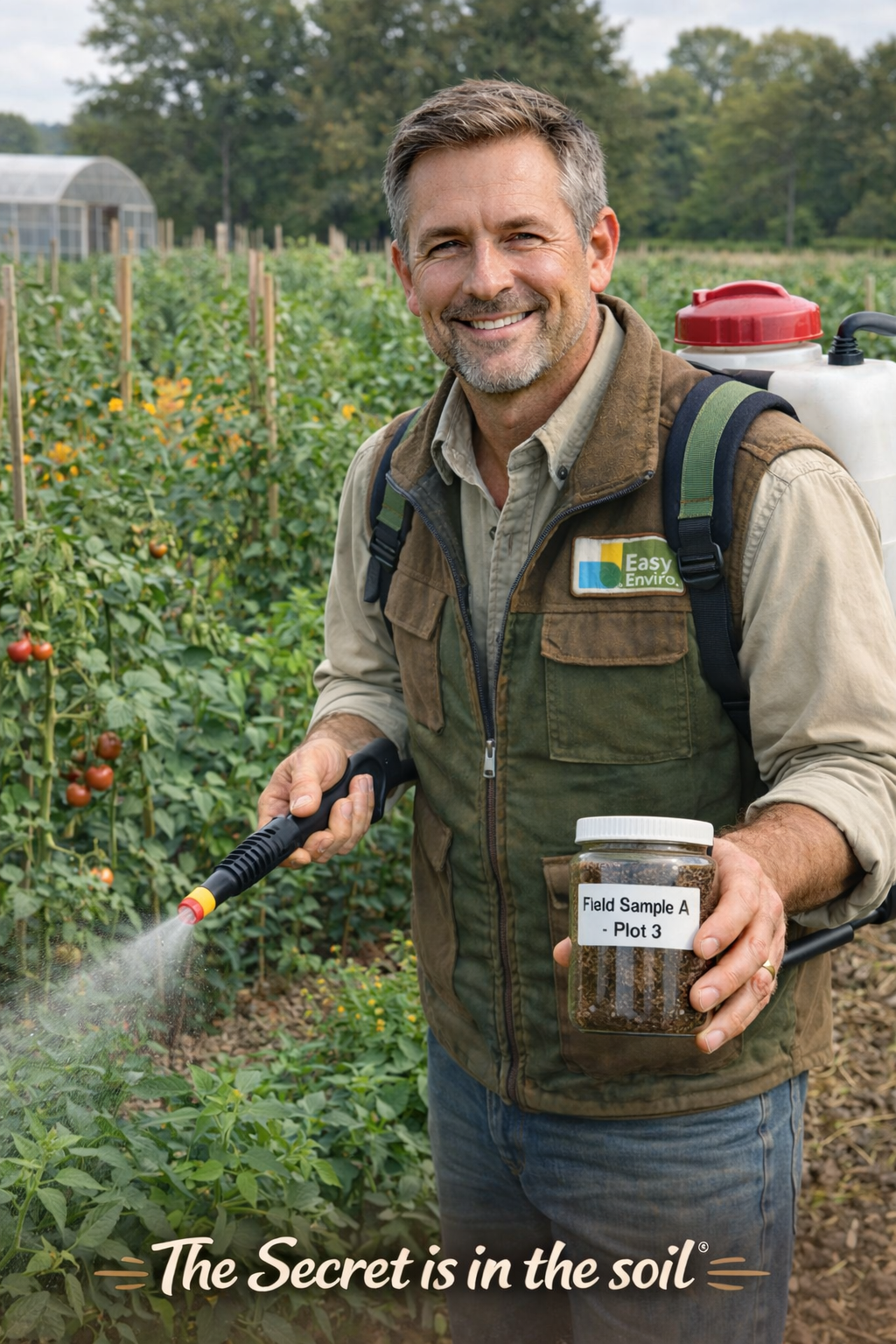
Biology-forward option (subtle but powerful):Some growers layer in a microbial soil amendment ahead of transplanting to support nutrient cycling and root-zone resilience. Terreplenish® is one example, made from beneficial microbes, including nitrogen-fixing and phosphate-solubilizing bacteria, designed to build active communities around roots.
How growers commonly time it (conceptually):
Pre-plant: apply 7-10 days before seeding/transplanting so biology can start settling into the rhizosphere.
At transplant: cool-season vegetables (including Brussels sprouts) are often targeted with a soil application before or at transplanting in some protocols
(Always follow label guidance; living microbial products also have compatibility rules, more on that below.)
Transplanting: spacing, depth, and windproofing
Brussels sprouts get tall and can catch wind like a sail.
Spacing (typical):
18-24 inches between plants is a common home-garden target.
Give them room, crowding can mean smaller sprouts and more disease pressure.
Hardening off (don’t skip):
7-10 days of gradually increasing outdoor exposure reduces transplant shock.
Set plants deep enough for stability
Plant at the same depth as the pot (or slightly deeper if stems are sturdy), firm soil, water in thoroughly.
Stake if your site is windy
A single sturdy stake can prevent late-season toppling when stalks are loaded.
Water + fertility through the season (the “don’t quit halfway” phase)
Brussels sprouts need steady growth early, then consistent care while sprouts form.
Water
Aim for consistent moisture, irregular watering often shows up as stress and uneven sprout development.
Fertility
Don’t overdo fast nitrogen late in the season; you want healthy leaves, but also tight sprouts. Tissue testing is ideal at scale, but gardeners can watch plant color and vigor.
Microbial product practical's (if you use them)If you choose to use Terreplenish® as part of your soil biology plan, a few handling basics matter:
Dilute appropriately (label minimum is often stated as at least 1 part product to 25 parts water for applications on living plants).
Use mixed solution promptly (commonly within 6 hours) and don’t store it diluted.
Avoid incompatible tank mixes (notably insecticides/fungicides and oil/soap/salt additives are commonly listed as “don’t mix”).
Those details are less “marketing” and more “biology”: living systems work best when you don’t accidentally wipe them out in the sprayer.
Common regions and seasonality
In the U.S., Brussels sprouts are strongly associated with California production, and shoppers can find them much of the year, yet peak season is typically fall into winter. For home gardeners, that translates to a simple rule:
Plan for sprouts to size up when your days are cool.
If your crop hits its stride in autumn, you’re in the sweet spot.
Harvest: how to know they’re ready (and how to keep them coming)
Pick when sprouts are firm and roughly 1-2 inches (depending on variety preference).
Harvest commonly progresses from bottom to top as the stalk matures over weeks.
Many gardeners wait for a couple cool nights; quality is often described as better after early frosts.
Pro tip: If you want more uniform sprouts, some growers remove the growing tip (“topping”) late in the season so the plant focuses on tightening existing buds (timing varies by variety and climate).
Quick summary
Brussels sprouts reward planners. Start Brussels sprouts indoors so you’re not burning outdoor weeks on slow seedling growth. Transplant sturdy starts, give wide spacing, keep moisture steady, and aim sprout formation into cool weather. Let frost do what it does best: nudge flavor in a sweeter direction.
Want a calmer, more resilient brassica bed this season? Build your base with compost + steady moisture, and consider a biology-first add-on like Terreplenish® to support active microbes around the root zone, especially at pre-plant and transplant timing.


Comments