


Grow Broccoli for Better Broccoli Soil Health and Bigger Heads with Terreplenish
Broccoli (Brassica oleracea Italica Group) is a cool-season classic, really a bouquet of unopened flower buds. Here’s how to plant, feed, irrigate, and harvest it for dense crowns and sweet flavor, whether you’re in a backyard bed or managing acres.

Meet broccoli: Brassica oleracea (Italica Group), with a quick history + a fun fact
Broccoli’s scientific name is Brassica oleracea (Italica Group) the same species “family tree” that also gave us kale, cabbage, Brussels sprouts, and cauliflower. Its story starts around the northern Mediterranean, with deep roots in Italy going back well over 2,000 years.
Fun fact: the part we eat is basically a cluster of tightly packed flower buds. If you harvest the main head at the right moment, many varieties will reward you with side shoots, a second (and sometimes third) wave of mini-broccoli.
When to plant broccoli in common regions
Broccoli is happiest in cool weather, think 55-75°F (and it can tolerate some chill; light frosts often improve flavor).
Typical seasonality (U.S. home gardens)
Spring crop: start seeds indoors and transplant after frost risk drops; aim for heading before consistent heat arrives.
Fall crop: often easier, warm soil helps establishment, then cooling temps help form tight heads.
Common U.S. production regions (and why they matter)
Commercially, California dominates U.S. broccoli production, with Arizona commonly cited as a major runner-up due to strong winter growing windows in desert agriculture. For growers and gardeners elsewhere, the takeaway is simple: broccoli performs best where you can give it a long, mild runway, spring and fall in most regions, and winter in mild climates.
Soil first: the foundation for dense heads
Broccoli is a “big appetite” brassica. If you want heavy, tight crowns, prioritize these basics:
1) Texture + drainage + consistent moisture
Aim for well-drained soil that stays evenly moist (not soggy, not bone-dry).
Mulch helps moderate temperature swings and protects moisture, especially important as heads begin to form.
2) Organic matter and biological activity
Compost, cover-crop residues, and gentle cultivation build crumb structure and keep the soil food web working. In regenerative systems, the goal isn’t just “add nutrients,” it’s improve nutrient cycling, so the plant can access what’s already there.
3) pH and the “brassica sweet spot”
Broccoli generally prefers near-neutral soil. If your pH is very low or very high, nutrient availability and root performance can suffer. (A simple soil test pays for itself fast.)
Organic broccoli fertilizer strategy: feed the plant, but don’t force it
Broccoli needs steady nutrition, especially nitrogen, without wild swings that cause bitter flavor, loose heads, or pest pressure.
A practical organic program (garden scale)
Before transplanting: compost + a balanced organic fertilizer (or composted manure) worked into the top few inches
Early growth: a light side-dress of nitrogen (feather meal, alfalfa meal, fish hydrolysate, etc.)
Heading stage: keep nutrition steady; don’t “spike” with heavy nitrogen late
A regenerative twist: biology that helps nutrients move
Healthy soils don’t just “contain nutrients” they deliver them. Microbial activity can improve nutrient availability and water dynamics in the root zone, which matters a lot when broccoli is building head mass.
Subtle option some growers explore is a microbial soil amendment designed to support nutrient cycling and water retention. Terreplenish® is described as a living biological product containing beneficial microbes (including nitrogen-fixing and phosphate-solubilizing activity) and is positioned for use in both conventional and organic systems, with certifications like OMRI listing and USDA biobased status noted in company materials.
Planting details that directly affect head size
Spacing
Crowded broccoli makes smaller heads. Give plants room to build a strong frame:
Home beds: often 18" in-row works well (variety dependent), with adequate between-row space for airflow.
Transplants vs. direct seeding
Transplants give you scheduling control (especially for spring).
Direct seeding can work for fall where soil stays workable and you can manage pests early.
Temperature management
Hot spells during head formation can trigger:
smaller heads
looser florets
premature flowering (“bolting”)
If you’re in a warmer zone, build your plan around the cool window: earlier spring or later fall.
Irrigation: the “quiet lever” for sweetness and tight florets
Broccoli responds best to consistent moisture, not cycles of drought and flood. Many growers like drip because it:
keeps foliage drier (less disease pressure)
targets the root zone
uses water efficiently
If you’re overhead watering, aim early in the day so leaves dry quickly.
Soil biology note: Company materials for Terreplenish® describe increased soil water-holding and improved infiltration in testing, which is why some land stewards trial microbe-based inputs alongside compost and mulch.
Pests and diseases: a calm, integrated approach
Broccoli’s most common headaches:
cabbage worms / loopers
aphids
flea beetles (on young plants)
root diseases in cool-season vegetables (site and rotation matter)
Practical IPM checklist
Row cover early (especially right after transplant) to block egg-laying moths.
Scout weekly: flip leaves, check the growing point.
Use Bt (for caterpillars) as-needed rather than automatically.
Rotate away from brassicas for at least 2–3 years if possible.
A note on biological foliar approaches
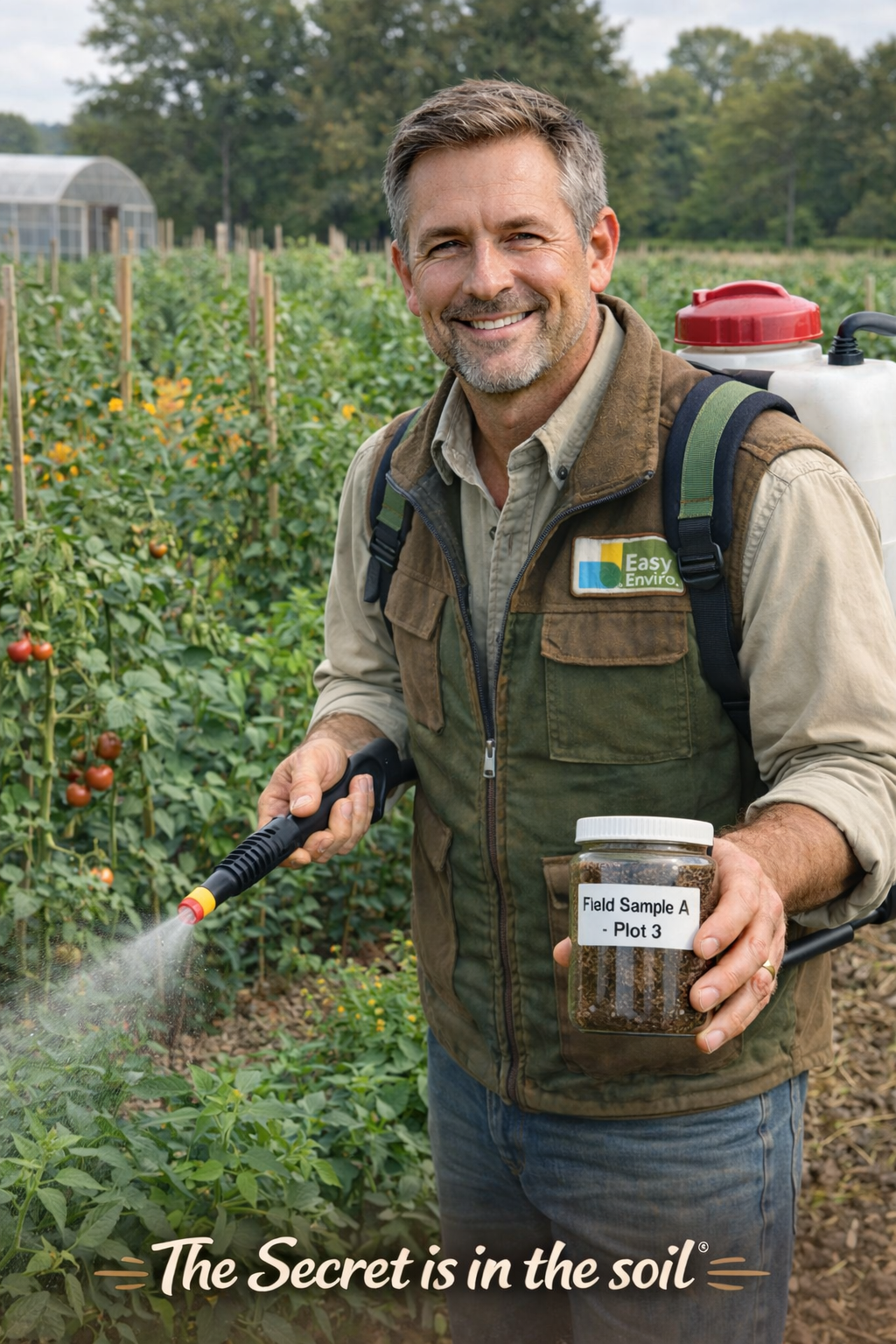
Some operations test biological sprays to support plant resilience. In a documented broccoli production trial (Beaver Creek Gardens, Illinois), a foliar program using a dilution schedule is described alongside yield and plant-size observations. If you experiment, keep it disciplined: side-by-side strips, consistent irrigation, and clear harvest records.

Using Terreplenish® to grow in a broccoli program (practical, non-hype guidance)
If you trial a microbe-based soil amendment like Terreplenish®, treat it like any agronomic experiment: small plot, clear timing, clean water, and consistent application.
Key handling notes from product materials:
It’s described as a living biological; once diluted with water, apply within a short window (materials emphasize using the mix promptly rather than storing it).
Minimum dilution guidance is referenced (commonly framed as at least 1:25 with water for foliar safety).
Tank mix caution: materials advise avoiding mixes with insecticides/fungicides/nematicides and certain oil/soap/salt adjuvants.
For cool-season vegetables (including broccoli), guidance in the sales kit references soil application rates in the 1–2 gal/acre range around pre-plant/transplant timing, with enough carrier water for distribution.
How growers often integrate it (common-sense template):
Pre-plant or at transplant: focus on the root zone (drip, in-furrow, or soil drench depending on scale).
Maintain moisture: microbes and roots both need a livable habitat.
Keep fertilizer reasonable: if biology increases nutrient availability, you may not need as aggressive a nitrogen push—use tissue/soil tests where possible.
Harvest timing: don’t miss the “tight bud” window
Harvest broccoli when the crown is:
full sized for the variety
tight and firm
buds still closed (no yellow petals showing)
Cut the stem several inches below the head. Many varieties will keep producing side shoots, especially if you keep water consistent and don’t let the plant stall.
Summary
Broccoli is a cool-season powerhouse that rewards growers who master timing, steady moisture, and soil function. Start with organic matter, keep nutrients consistent (not spiky), and protect young plants from pests. If you’re trialing biological inputs, do it thoughtfully, small plots, clean records, and side-by-side comparisons, so you can see what truly improves broccoli soil health and marketable yield.
Ready to level up your broccoli this season? Start with compost, consistent irrigation, and a simple nutrition plan, then trial one change at a time. If you want to explore biology-forward soil support, check out Terreplenish® and match it with good moisture management and clean mixing practices. You can source broccoli starts, row cover, compost, and irrigation parts at local farm & garden centers, or browse regenerative inputs online through Terreplenish and Easy Environmental Solutions.
Check out our Terreplenish field trial HERE

Comments